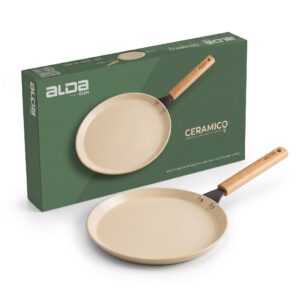
| Non-Stick Tawa | Stainless Steel Tawa | |
|---|---|---|
| Best for | Dosa, chilla, eggs, anything that sticks | Roti, phulka, paratha, high-heat searing |
| Oil needed | Very little — the coating does the work | More, and the pan must be seasoned |
| Lifespan | 2–4 years; the coating is the limit | Effectively indefinite with care |
| Heat tolerance | Keep to low and medium — high heat kills it | Takes any heat a domestic burner produces |
| Utensils | Wood or silicone only | Metal is fine |
| Cleaning | Wipes clean; never scour | Scrub freely; may need soaking |
| Induction | Only if the base says induction-compatible | Usually yes — check the base |
The recommendation
Buy non-stick if you cook dosa and eggs more often than roti, and accept replacing it every few years. Buy stainless steel if you make roti daily and want to buy a tawa once. Most Indian kitchens end up owning both, and if you are choosing only one, the steel tawa is the one that will still be there in ten years.
Common questions
Which tawa is better for roti?
Stainless steel. It takes the high, dry heat a phulka needs, and metal tongs will not damage it. Non-stick coatings degrade quickly at the temperature good roti wants.
Is non-stick safe to cook on?
Yes, within its limits — keep it below high heat, do not preheat it empty, and stop using it once the coating is scratched or flaking.
Why does food stick to my new steel tawa?
It has not been seasoned. Heat it, wipe a thin film of oil across the surface, let it cool, and repeat a few times. Steel gets better with use; non-stick only gets worse.
On offer in these categories